

Hybrid Transmission Best For Credible 2027 Polls — Abbas
•By Admin
ABUJA — THE Speaker of the House of Representatives, Tajudeen Abbas, has defended the decision of the National Assembly of Nigeria to retain both electronic and manual transmission of election results in the amended Electoral Act, saying the hybrid system is the most practical path to credible and inclusive elections in 2027.
Abbas said relying solely on electronic transmission would risk disenfranchising millions of Nigerians due to inadequate internet coverage and persistent electricity challenges across the country.
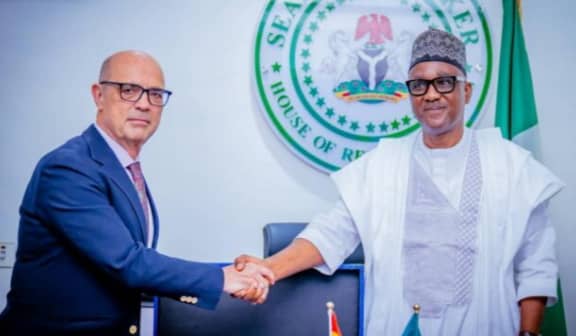
The Speaker spoke in Abuja while hosting the Spanish Ambassador to Nigeria during a courtesy visit, where discussions also centred on electoral reforms and parliamentary cooperation ahead of the 2027 general elections.
According to Abbas, reports indicate that nearly 40 per cent of Nigeria’s territory remains underserved by internet connectivity, making it unrealistic to depend exclusively on electronic transmission of results. “A lot of people believe we should adopt full electronic transmission in real time,” he said.
“But even in advanced cities like Abuja, stable internet service is not guaranteed at all times. If we insist on only electronic transmission, we risk disenfranchising a significant portion of Nigerians.”
He noted that voter turnout in previous elections has hovered between 12 and 15 per cent of registered voters, describing the figure as alarming and reflective of deep voter apathy.
“If with the current manual arrangement we are only recording about 12 to 15 per cent participation, introducing an exclusive electronic system in a country where 40 per cent of areas lack adequate internet will further reduce turnout,” Abbas said. “That is avoidable. The hybrid system ensures that where electronic transmission is feasible, it will be used, and where it is not, manual transmission will apply.”
The Speaker also cited Nigeria’s energy deficit as another major constraint to full digital transmission.
“The internet is backed by electricity. How do you power the entire country on election day to guarantee real-time transmission everywhere?” he queried. “These are practical realities we must confront.”
He maintained that the decision was taken in good faith to strengthen transparency rather than weaken it, adding that even critics of the amendment are aware of the infrastructural limitations facing the country.
Abbas, however, assured Nigerians that the 2027 general elections would be more transparent, accommodating and inclusive than previous polls. He said he had interacted with the leadership of the Independent National Electoral Commission and expressed confidence in the commission’s reform plans.
“I had the opportunity to engage with the INEC chairman and listened to his plans. If fully implemented, Nigeria will move forward significantly. The next elections will be better,” he said.
He described democracy as a continuous process of improvement, stressing that Nigeria, like other democracies, is evolving and learning from experience.
“Every democracy is a work in progress. We may not be where the international community expects us to be, but we are making steady progress,” Abbas added.
In his remarks, the Spanish Ambassador said Spain would closely follow Nigeria’s 2027 elections and expressed readiness to deepen parliamentary diplomacy between both countries.
He noted that Spain also utilises manual transmission in its electoral process and emphasised the need for compromise and consensus in democratic governance, especially in periods of political polarisation.
He assured Nigeria of Spain’s support in strengthening democratic institutions and legislative collaboration.
The meeting also highlighted the importance of technical cooperation in legislative drafting and parliamentary exchanges as both nations seek to deepen bilateral relations.
•INDEPENDENTNG.