

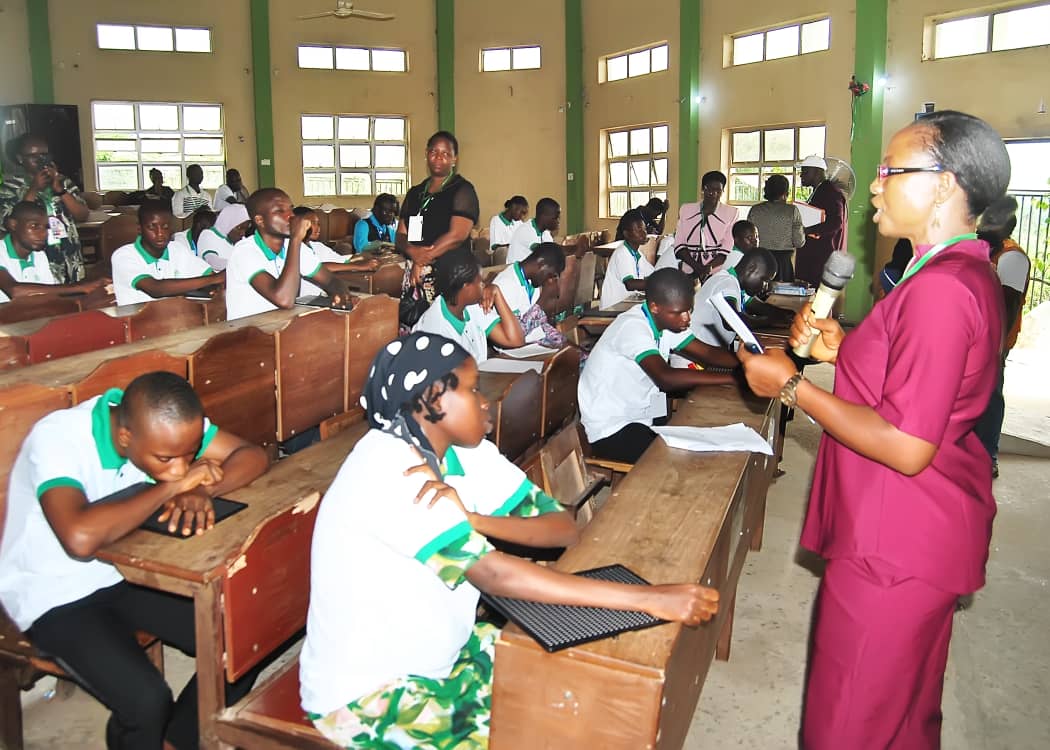
Okebukola, Adedoja Laud Oloyede As 536 Blind Candidates Sit 2026 UTME
•By OYENIYI AWOJOODU
IBADAN — THE Chairman of the JAMB Equal Opportunity Group (JEOG), Peter Okebukola, has commended the Registrar of the Joint Admissions and Matriculation Board (JAMB), Is-haq Oloyede, for his sustained commitment to inclusive education, as 536 blind candidates successfully participated in the 2026 Unified Tertiary Matriculation Examination (UTME).
Speaking with journalists on Monday during the commencement of the special UTME sessions, Okebukola stated that the Oloyede-led administration has ensured that no qualified Nigerian is denied the opportunity to sit for the examination on account of disability.
Monitoring the exercise from the Oyo centre, he disclosed that the examination was conducted seamlessly across 11 designated centres nationwide, including Oyo, Ekiti, Enugu, Bauchi, Lagos, Kano, Abuja, Jos, Kebbi, Yola and Sokoto.
Okebukola noted that since 2017, JAMB, through JEOG, has provided comprehensive support services for candidates with disabilities.
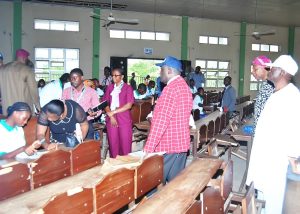
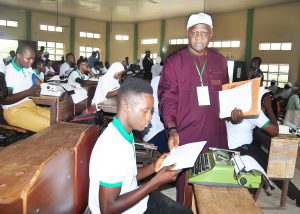
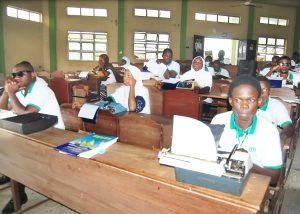
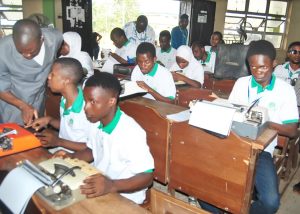
These include free accommodation for candidates and their guides, feeding, transportation, and customised examination materials.
He explained that the successful conduct of the examination underscores JAMB’s commitment to equal opportunity and access to higher education for all Nigerians, regardless of physical challenges.
Highlighting innovations introduced to enhance accessibility, Okebukola pointed to the adoption of a bimodal examination system, which allows candidates to choose between Fully-Braille and Fully Read-Aloud formats. He noted that the initiative, now in its third year, has significantly improved the examination experience for visually impaired candidates.
Providing a breakdown of candidates’ distribution, he revealed that Kano recorded the highest number with 136 candidates, followed by Lagos with 95, while Abuja had 46. Other participating centres included Ado-Ekiti, Bauchi, Benin, Enugu, Kebbi, Oyo, Jos and Yola.
He added that the exercise was supported by past and serving chief executives of tertiary institutions, who volunteered their expertise to ensure smooth coordination and credible conduct across all centres.
On admission outcomes, Okebukola expressed satisfaction with the steady improvement in the performance of candidates with disabilities.
According to him, in the 2025 admission cycle, 483 candidates applied for tertiary education, out of which 252 secured admission, representing a 52.2 per cent success rate.
He further disclosed that visually impaired candidates accounted for the highest number of applications, while other categories such as Down Syndrome, Autism Spectrum Disorder, and Dyslexia recorded encouraging admission rates. Notably, candidates with Dyslexia achieved full admission success.
Okebukola also observed a growing interest among candidates with disabilities in Science, Technology, Engineering and Mathematics (STEM) disciplines, describing the trend as a positive development for national growth.
Despite the progress, he acknowledged persistent challenges faced by blind students in science-related courses, noting that efforts have been ongoing since 2018 to address these barriers.
Since its inception, he said, JEOG has supported about 3,200 candidates with disabilities to participate in UTME, with over one-third gaining admission into tertiary institutions. He added that the initiative has attracted recognition across Africa as a model for inclusive education.
Also speaking, Taoheed Adedoja, former Provost of the Federal College of Education (Special), Oyo, praised Oloyede for what he described as remarkable achievements in the administration of UTME over the past decade.
Adedoja highlighted the consistency, transparency and innovation introduced into the examination system under Oloyede’s leadership, noting that these have significantly improved public confidence in JAMB and ensured fairness in the admission process.
Both stakeholders stressed the need to sustain the inclusive framework for candidates with special needs, emphasizing that education remains a fundamental right for every citizen.