

Senate Rescinds Clause 60 As Tension Trails Emergency Electoral Bill Sitting
•By Admin
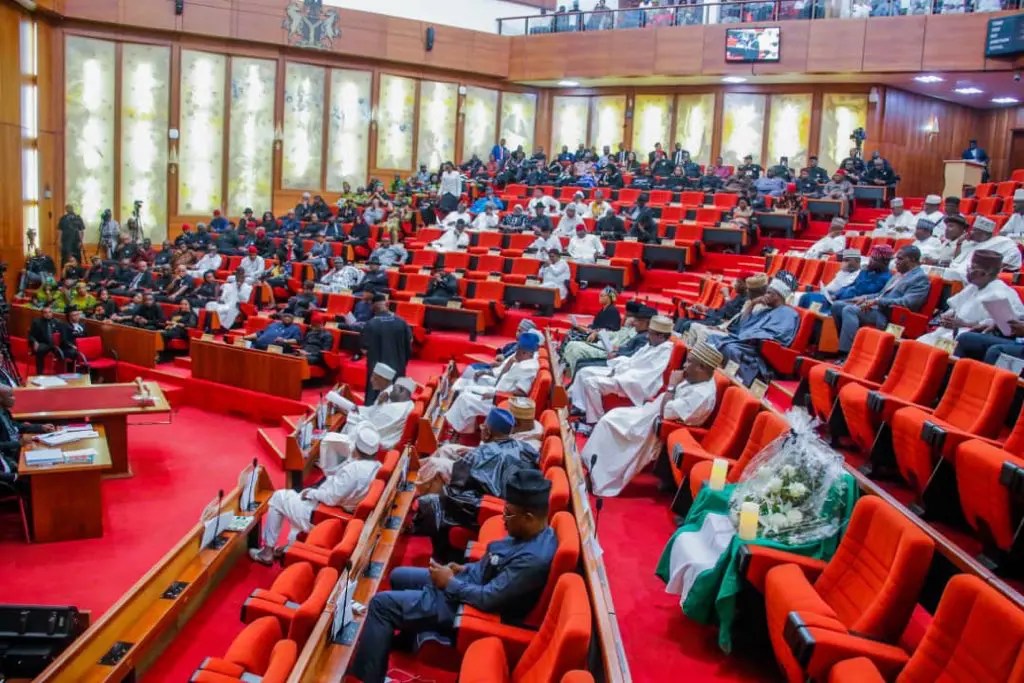
ABUJA – THE Nigerian Senate on Tuesday descended into heated procedural disputes, sharp interventions and dramatic withdrawals as it convened an emergency plenary to reconsider Clause 60(3) of the Electoral Act Repeal and Enactment Bill, 2026, a provision at the heart of the controversy over electronic transmission of election results.
The emergency session, summoned amid mounting public backlash and political pressure, centred on a motion for rescission moved by Senator Mohammed Tahir Monguno (APC, Borno North), seeking to reverse an earlier Senate decision on Clause 60(3) and recommit it to the Committee of the Whole for fresh legislative consideration.
The clause governs how results from polling units are transmitted, collated and declared, and has become a lightning rod for public distrust following fears that the Senate was attempting to weaken electronic transmission safeguards contained in the 2022 Electoral Act.
Rising to move the motion, Senator Monguno explained that the Electoral Act Repeal and Enactment Bill was passed by the Senate on Wednesday, February 4, 2026, but that “upon careful examination of the bill, pressing issues have emerged in respect of Clause 60(3), which require further legislative consideration in order to ensure the conduct of smooth, transparent and credible elections in Nigeria.”
Relying on Orders 1(b) and 52(6) of the Senate Standing Orders 2023 (as amended), Monguno formally moved that the Senate rescind its earlier decision on Clause 60(3) and recommit the provision for reconsideration and passage.
However, the motion immediately triggered procedural confusion and sharp disagreements on whether it was properly before the chamber, given that the Senate was still considering Votes and Proceedings from the previous sitting.
Senator Yahya Abdullahi (APC, Kebbi North) initially argued that what Monguno raised amounted to a correction or notification that should be noted after the adoption of Votes and Proceedings.
But other senators countered that Monguno had already invoked Order 1(b), which allows the Senate to suspend its normal rules to deal with urgent matters.
The Senate President, Godswill Akpabio ruled that the invocation of Order 1(b) had been validly made, put to a voice vote and agreed to, thereby allowing the motion to proceed. “He has invoked Order 1(b), it was put to vote and it was agreed. So it should continue,” the presiding officer ruled, effectively clearing the way for the motion.
As debate resumed, Monguno clarified that the controversy stemmed from the earlier substitution of the word “transmission” with “transfer” in the clause, a change that generated public suspicion and confusion over the integrity of result management.
He said the amendment now being proposed was intended to remove ambiguity and restore public confidence. “The Senate, being an embodiment of the representative will of the people, will always act in consonance with the wishes and aspirations of the people,” Monguno said. “This amendment is to ensure that our laws reflect those wishes and aspirations.”
Under the revised proposal read into the record, the presiding officer at each polling unit “shall electronically transmit the results from each polling unit to the INEC Result Viewing (IReV) portal,” after the prescribed Form EC8A has been signed and stamped by the presiding officer and countersigned by polling agents where available.
Crucially, the amendment also provides that where electronic transmission fails due to communication or network challenges, the signed and stamped Form EC8A shall serve as the primary source for collation and declaration of results.
The explanation, however, did little to calm the chamber.
Several senators raised points of order, questioning whether the amendment reflected what was actually captured by the Clerk during the previous vote. One senator noted that even the Clerk appeared not to have reflected the controversial wording during the last sitting, further complicating the legislative trail.
Despite the tension, Senator Abass Aminu (APC, Kebbi Central) rose to second the motion, describing the development as “the beauty of democracy” and arguing that the Senate had the right to revisit and correct its decisions in the public interest.
After the motion was read again, the Senate President put it to a voice vote. A chorus of “Ayes” appeared to outweigh the “Nays,” and the presiding officer declared that the motion had been carried.
That declaration immediately triggered fresh drama.
Senator Eyinaya Abaribe from Abia South rose under Order 72 to challenge the opinion of the Chair and demanded a division, which would have required individual votes to be recorded electronically or by name.
The demand for division heightened tension in the chamber, as some senators openly expressed concern that reopening the vote could further inflame public controversy around the bill.
Moments later, in a surprising twist, the senator who demanded a division withdrew the request, effectively allowing the voice vote ruling to stand.
Further attempts by the Senator Danjuma Gone, APC Gombe Central, to make a personal explanation were ruled out of order, as the senator had not submitted the proposed statement in advance, in line with Senate rules.
With the substantive controversy temporarily contained, the Senate moved on to a related but equally significant decision: the composition of the Conference Committee on the Electoral Bill Amendment, 2026.
The Senate approved an expansion of its conferees from nine to twelve members to match the number from the House of Representatives, ensuring parity ahead of harmonisation between both chambers.
Senator Simon Bako Lalong was named Chairman of the Conference Committee, while Senator Monguno, Senator Abubakar Kyari, Senator Abass Aminu, Senator Tokunbo Abiru, Senator Adeniyi Adegbomire (SAN), Senator Jibril Isa Ochacho, Senator Banigo Ipalibo and Senator Nwebonyi were listed among the members.
The Senate President urged the committee to treat the assignment as a matter of urgency, expressing optimism that the harmonisation process could be concluded within days.
“If you are able to conclude within the next few days or one week, the President should be able to sign this amended Electoral Bill within this month of February,” he said.
Tuesday’s emergency plenary underscored both the political sensitivity of electoral reforms and the growing pressure on the National Assembly to align its actions with public expectations ahead of future elections.
While the Senate insists that its intervention is aimed at clarity and credibility, the events of the sitting revealed deep unease within the chamber and persistent public mistrust over any perceived weakening of electronic transmission provisions — a reform widely credited with improving transparency in recent elections.
As the Conference Committee begins its work, all eyes will now be on whether the final harmonised bill restores confidence or deepens suspicion in Nigeria’s electoral process.