

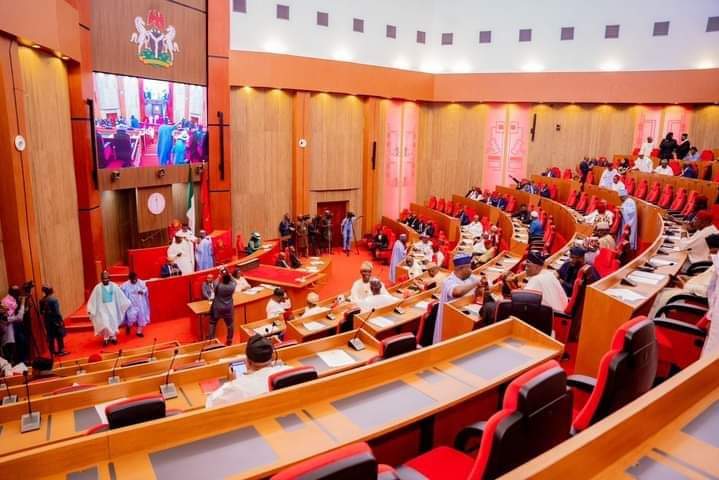
Electoral Amendment: Real-Time E-Transmission Of Results Divides Senate
•By Admin
ABUJA — THE Senate was on Tuesday divided following tense deliberations and a contentious debate over Clause 60 of the Electoral Act 2022.
This followed a motion titled “Rescission and Re-Committal of the Electoral Act, 2022 (Repeal and Enactment) Bill, 2026 moved by the Senate Leader, Senator Opeyemi Bamidele (APC Ekiti Central) and seconded by chairman, Senate Committee on INEC, Senator Simon Lalong (APC Plateau South) during another emergency plenary by the upper legislative chamber.
The upper chamber passed the bill without real time electronic transmission of election results from polling units to INEC Results Viewing, IREV portal.
It also amended Clause 28 (1) of the Electoral Act, 2022 (Repeal and Enactment) Bill, 2026 which allows the Independent National Electoral Commission, INEC to tinker with election timetables because of Ramadan fast which coincides with the 2027 general elections.
The amended clause on ‘Notice of Election’ states that “The Commission shall, not later than 300 days before the day appointed for holding an election under this Bill, publish a notice in each State of the Federation and the Federal Capital Territory.”
There has been serious concern over the timing of the 2027 general elections and technical inconsistencies in the legislation.
INEC had last Friday announced that the Presidential and National Assembly elections would be held on February 20, 2027, while the governorship and state assembly polls are scheduled for March 6, 2027 based on the provision of the principal law which provides that “The Commission shall, not later than 360 days before the day appointed for holding an election under this Bill, publish a notice in each State of the Federation and the Federal Capital Territory.”
Rising under Order 52(6) of the Senate Standing Orders, the Senate Leader, Opeyemi Bamidele, moved the motion to reverse the earlier passage of the bill and return it to the Committee of the Whole for fresh deliberations.
He explained that the development follows the announcement of next year’s elections timetable by the INEC after consultations with the leadership of the National Assembly, informing that stakeholders had raised concerns that the proposed date conflicts with the provisions of the amended law, particularly the requirement that elections be scheduled not later than 360 days before the expiration of tenure.
Bamidele noted that upon critical review of the passed bill, the 360-day notice requirement prescribed in Clause 28 could result in the scheduling of the 2027 Presidential and National Assembly elections during the Ramadan period.
He added that elections during Ramadan could affect voter turnout, logistics, stakeholder participation, and the overall inclusiveness and credibility of the process.
The Senate Leader also highlighted discrepancies in the bill’s Long Title and multiple clauses, including Clauses 6, 9, 10, 22, 23, 28, 29, 32, 42, 47, 51, 60, 62, 64, 65, 73, 77, 86, 87, 89, 93, and 143.
Before the passage of the Electoral Act (Amendment) Bill, there was a rowdy session as the former Minority Leader, Senator Enyinnaya Abaribe (ADC Abia South) called for division over Clause 60(3), which permits both electronic and manual transmission of election results.
But the Deputy Senate President, Senator Barau Jibrin, citing Order 52(6), argued that it would be out of order to revisit any provision on which the Senate President had already ruled.
The Senate Leader then reminded lawmakers that he had sponsored the motion for rescission, underscoring that decisions previously taken by the Senate are no longer valid, adding that consistent with his motion, Senator Abaribe’s demand was in line.
But the Senate President noted that the call for division was merely an attempt by Senator Abaribe to publicly demonstrate his stance to Nigerians and therefore sustained the point of order, after which Abaribe rose in protest and was urged to formally move his motion.
Rising under Order 72(1), Abaribe called for a division on Clause 60(3), specifically concerning the provision that if electronic transmission of results fails, Form EC8A should not serve as the sole basis, calling for the removal of the proviso that allows for manual transmission of results in the event of network failure.
After the call for vote, 55 senators voted in favour of the Senate position last week, while 15 lawmakers asked for the adoption of the House of Representatives’ earlier version which permits ‘real-time’ transmission of election results.
•INDEPENDENTNG.