

Advocacy Group Highlights Structural Imbalance In Oyo, Urges Justice, Equity
•By OYENIYI AWOJOODU
IBADAN — A socio-political association known as the Ẹgbẹ́ Àjọṣepọ̀ Fún Ìtẹsiwájú Gbogbo Wa, whose vision and drive is Governorship Power Rotation to Òkèògùn come 2027, has presented a detailed account of its advocacy journey, raising concerns over what it described as entrenched structural imbalance and marginalisation across key regions of Oyo State.
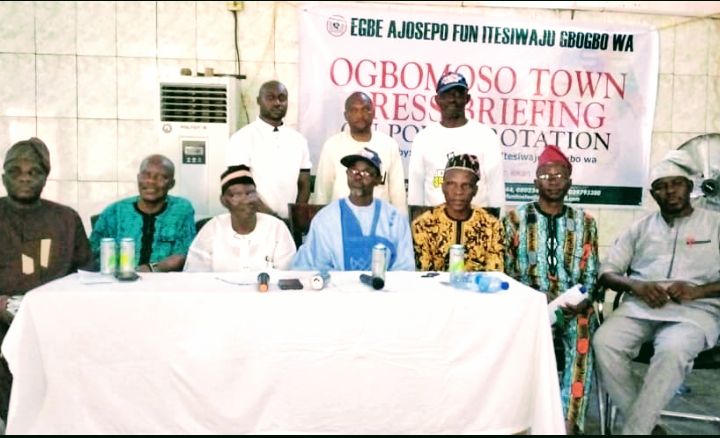
Addressing journalists at a two-day press briefing held in Oyo and Ògbómọ̀ṣọ́, the National Chairman, Engr. Dauda Olaifa, said the movement, established in December 2024, was committed to promoting justice, fairness, equity and inclusive governance.
He said the group was approaching its second year with a growing profile, having evolved “from obscurity to recognition, and from silence to a resounding voice” in socio-political discourse within and beyond the state.
Olaifa stated that the group’s advocacy had brought increased attention to what it identified as the marginalisation of Òkèògùn, Ìbàràpá, Ọ̀yọ́ and Ògbómọ̀ṣọ́, noting that political power had, over time, been disproportionately concentrated in one region.
According to him, the principles of fairness, justice, equity, equality and inclusivity had not been adequately reflected in the governance structure of the state, adding that the Federal Character principle as enshrined in Section 14 (3) and (4) of the Constitution had not been fully observed in practice.
He listed manifestations of the imbalance to include lopsided appointments and promotions, uneven infrastructural development, disparities in access to education, healthcare and social amenities, and the concentration of opportunities within the capital axis to the detriment of grassroots communities.
“In essence, what was once hidden is now visible, and what was once ignored is now acknowledged,” he said.
The chairman further observed that the political structure of the state reflected “a troubling imbalance where equality is professed but not practiced,” warning that persistent inequality could heighten agitation among marginalised groups if not addressed.
While reaffirming the group’s commitment to peaceful advocacy, he noted that prolonged injustice historically breeds unrest, stressing the need for proactive correction of systemic disparities.
Olaifa also attributed the situation to entrenched interests across regions, including elite actors who either benefit from or sustain the status quo, alongside factors such as disunity among marginalised regions and internal rivalries driven by religion, party affiliation and local sentiments.
Reviewing recent political developments, he referenced the emergence of party chairmen from Òkèògùn in major political parties, describing the development as contrary to the group’s strategic expectations but not detrimental to the region’s aspiration to produce the state’s governor.
He expressed confidence that historical precedents support the possibility of a region producing both party leadership and executive power.
On a recent high-level political meeting held on April 6, Olaifa cited what he described as a clear structural imbalance in representation. He said out of 16 identified participants, 10 were from the Ìbádàn axis, while Òkèògùn had two representatives and Ògbómọ̀ṣọ́, Ìbàràpá and Ọ̀yọ́ had one each.
He questioned the inclusivity of such a composition, asking whether decisions from a meeting dominated by one region could genuinely reflect equity and collective interest.
“A stakeholders’ meeting must, by definition, be inclusive. Where representation is uneven, decisions risk being perceived as biased, regardless of intention,” he said.
The chairman also noted the absence of several notable stakeholders from the meeting, describing it as a continuation of long-standing patterns influencing political outcomes in the state.
He warned that a perceived “born-to-rule” mindset, combined with exclusion and internal divisions, could undermine political balance and long-term stability if left unchecked.
Calling for reflection, Olaifa said a system that consistently sidelines segments of its population could not sustain unity indefinitely, stressing that equity must replace dominance and inclusion must replace exclusion.
He reaffirmed the group’s commitment to peaceful engagement and expressed optimism about the possibility of achieving a fair, just, equitable and inclusive political process in the state.
Other speakers at the two-day briefing included Pst Favour Adewoyin, National Secretary; Engr. Olusola Babalola, Finance Secretary; Dr. Alabede, a member of the Ọ̀yọ́ Executive Council of the group; and Dr. Jonathan Ojedokun, Òkèògùn Youth Leader. They all echoed the call for justice, equity and balanced political representation.
The event also drew participation from other well-meaning indigenes of Òkèògùn who live in, Ògbómọ̀ṣọ́ and Ọ̀yọ́ as well as indigenes of those other regions, who expressed support for the group’s advocacy and its demand for a more inclusive governance structure in the state.
“Our message is clear and unwavering: justice must be done, equity must be restored, and inclusivity must be guaranteed,” Olaifa said.