
Oyo Unveils N891.98bn 2026 Budget Breakdown, Says State ‘On The Right Track’
•By OYENIYI KAZEEM
IBADAN – THE Oyo State Government has released details of its proposed ₦891.98 billion 2026 budget, assuring residents that the state remains firmly on course as it prepares for full-scale implementation next year.
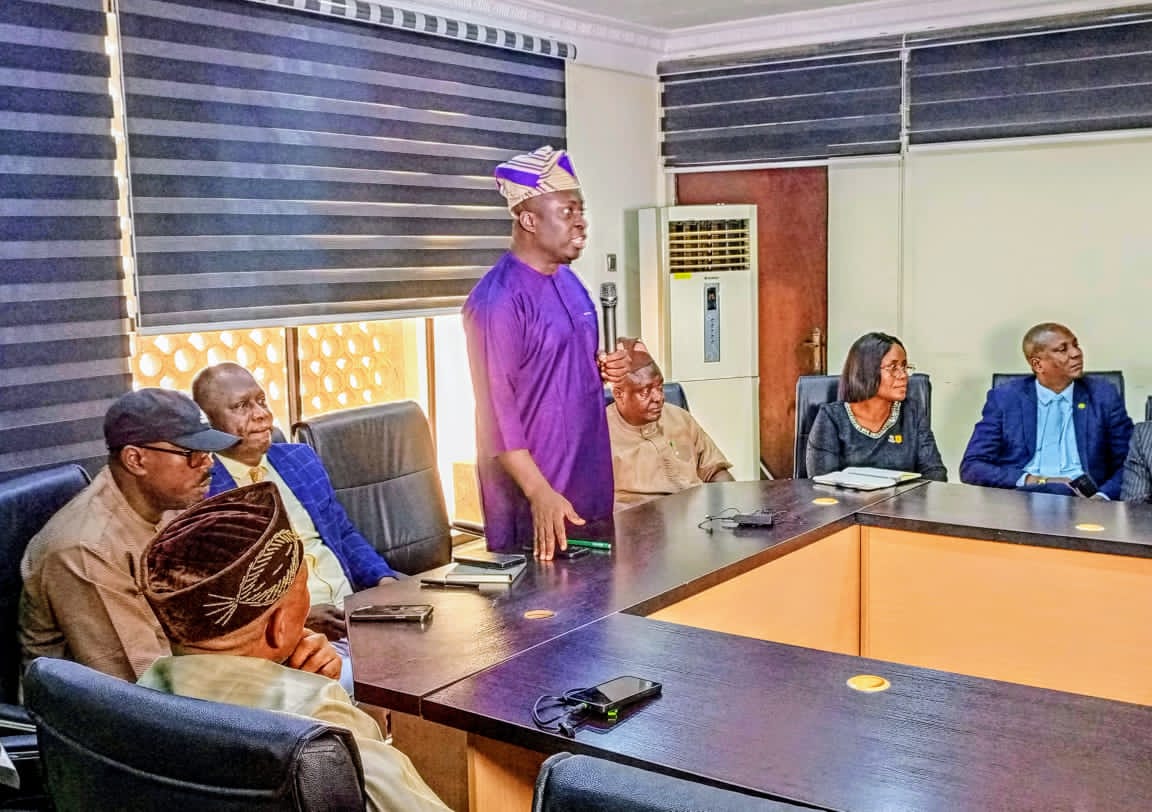
Speaking during a budget breakdown session held on Tuesday at the Conference Room of the Ministry of Budget and Economic Planning, the Commissioner for Budget and Economic Planning, Prof. Musibau Babatunde, said the government’s impact would become more visible when execution begins.
According to him, the budget was developed through extensive collaboration involving the Ministries of Budget and Economic Planning, Finance, peer review committees and other critical stakeholders across the state.
The budget comprises ₦502.8 billion (56.7%) for capital expenditure and ₦389.1 billion (43.3%) for recurrent expenditure.
Babatunde described the document as a flexible guide that will continue to evolve, recalling that in 2019, the administration had trimmed the inherited budget by 25 percent due to low implementation capacity. That experience, he said, shaped the principle that budgets must remain adaptable and open to review.
He added that quarterly performance reviews—already ongoing—ensure transparency and allow citizens to raise concerns in key sectors such as education, security, agriculture and health. Ministries and agencies are now required to specify the exact locations, target communities and facilities for every proposed project, a measure he said will curb vague proposals and reduce abandoned projects.
The commissioner disclosed that the state achieved over 70 percent budget performance in the outgoing 2025 fiscal year, based on projected revenue and expenditure.
Sectoral Allocations Of the total budget, Education receives ₦155.21bn (17.40%); Agriculture gets ₦19.99bn (2.24%); Health takes ₦70.85bn (7.94%); Infrastructure is allocated ₦210.03bn (23.55%);Other sectors collectively receive ₦435.91bn (48.87%)
The revenue projections for the year 2026, the state expects, ₦140.08bn from statutory allocation; ₦199.72bn from VAT; ₦51.18bn from other FAAC components; ₦322.54bn from capital receipts and loans; ₦4.73bn from grants; ₦73.35bn in internally generated revenue (IGR); ₦20.19bn from special BIR revenue.
Babatunde attributed recent improvements in revenue to automation and enhanced efficiency, stressing that taxes were not increased.
The commissioner said the fiscal plan aligns with flagship projects designed to reposition Oyo State for regional and global competitiveness. These include:Oluyole Free Trade Zone; Special Agro-Processing Zones (SAPZ); Dry port and logistics hubs; Upgrade of Samuel Ladoke Akintola Airport to international standard; 110km Rashidi Ladoja Circular Road.
He noted that these initiatives support the shift from a consumption-driven economy to a production-oriented one rooted in agriculture, manufacturing, digital innovation, human capital development and the creative industries.
“The Budget of Economic Expansion reflects our commitment to deepening the state’s economic base, strengthening local enterprise, expanding infrastructure and reinforcing social protection systems,” he said.
Addressing concerns over when the benefits of the state’s investment in the African Continental Free Trade Area (AfCFTA) will materialise, the Special Adviser, Ms. Theodore Tlhaselo, said the initiatives will soon deliver visible impact.
She emphasised that Oyo State is strategically positioned as an agribusiness investment hub capable of creating jobs and improving livelihoods through the AfCFTA platform.
Post Views: 100