


WORKERS’ DAY: Insecurity, Poverty Disrupt Economic Activities, Public Service – Makinde
•••Reaffirms Commitment To Workers’ Welfare
•••As Labour Demands Stronger Government Action
•By OYENIYI AWOJOODU
IBADAN — INSECURITY and poverty took centre stage at the 2026 Workers’ Day celebration in Ibadan, as Oyo State Governor, Seyi Makinde, defended his administration’s record on workers’ welfare and security, while organised labour called for more decisive action to address worsening economic hardship and safety concerns.
The event, held at the Lekan Salami Stadium, highlighted growing concerns over the impact of insecurity and economic challenges on productivity and public service delivery.
Represented by the Secretary to the State Government, Professor Musbau Babatunde, the governor described Workers’ Day as more than a ceremonial event, stressing the need to uphold workers’ dignity and ensure government accountability.
“Today is not just a celebration; it is a statement that the dignity of labour must be protected, that workers must be respected, and that government must be held accountable,” he said.
Speaking on the theme, “Insecurity and Poverty: Threats to a Conducive Work Environment,” Makinde said both challenges had created a hostile working environment across the state.
According to him, insecurity had continued to disrupt economic activities and public service delivery.
“When workers are afraid to travel due to kidnappers and bandits, when teachers and health workers fear attacks, and when engineers cannot access project sites, then the workplace is no longer conducive,” he said.
He further noted that poverty weakens workers’ morale and productivity.
“A worker whose wage cannot meet basic needs cannot be motivated. Poverty fuels desperation, encourages corruption, and weakens commitment to service,” he added.
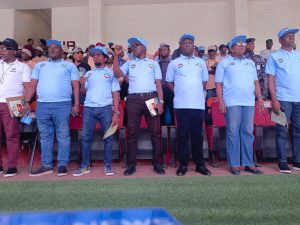



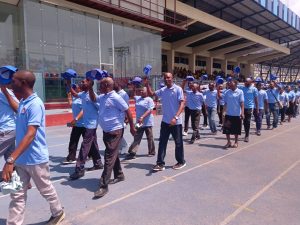











Makinde warned that insecurity and poverty form a “vicious cycle” that must be urgently addressed to ensure sustainable development.
The governor outlined measures taken to improve security, including strengthening the Amotekun Security Network, supporting security agencies with logistics, and investing in surveillance and intelligence gathering.
On workers’ welfare, he maintained that the state had consistently paid salaries and pensions promptly since 2019.
“For 92 consecutive months, salaries have been paid on or before the 25th. We do not owe, and we do not pay in percentages,” he said.
He added that the government had implemented the national minimum wage, introduced a N10,000 monthly transport subsidy, and significantly increased gratuity payments to clear outstanding arrears.
Makinde also highlighted reforms in the public service, including digitalisation, restructuring, and improved career progression, noting that promotion backlogs had been cleared and terminal grade levels extended.
Despite acknowledging the government’s efforts, the Nigeria Labour Congress said workers continued to face severe challenges.
Oyo State NLC Chairman, Kayode Martins, described the situation as reflective of the “harsh realities” confronting workers.
“Insecurity has continued to undermine productivity. Farmers are driven from their lands, traders fear travelling, and public servants operate under constant fear,” he said.
He also decried rising inflation and the erosion of real wages, noting that many workers struggle to meet basic needs.
“Decent work remains out of reach for many,” he added.
Martins called for stronger policies to tackle poverty, unemployment, and poor working conditions, while urging government at all levels to prioritise the safety of lives and property.
The labour leader also stressed the need to protect democratic institutions and warned against electoral malpractice.
“The will of the people must always prevail. Citizens must reject vote buying and actions that undermine democracy,” he said.
TUC, Workers Seek Urgent Action
Also speaking, Chairman of the Trade Union Congress of Nigeria in the state, Bosun Olubiyi, commended workers and expressed optimism about continued progress.
He cited the reinstatement of 800 workers disengaged by Dangote Group as a major victory for organised labour, attributing it to sustained negotiations.
However, Olubiyi warned that rising inflation, fuel costs, and insecurity continue to place heavy financial strain on workers.
Labour leaders jointly called for unity among workers and renewed commitment to the ideals of the labour movement.
“Our strength lies in our unity. This is not just a time for reflection but a call to action, to confront insecurity, fight poverty, and reclaim decent work for all,” Martins said.