

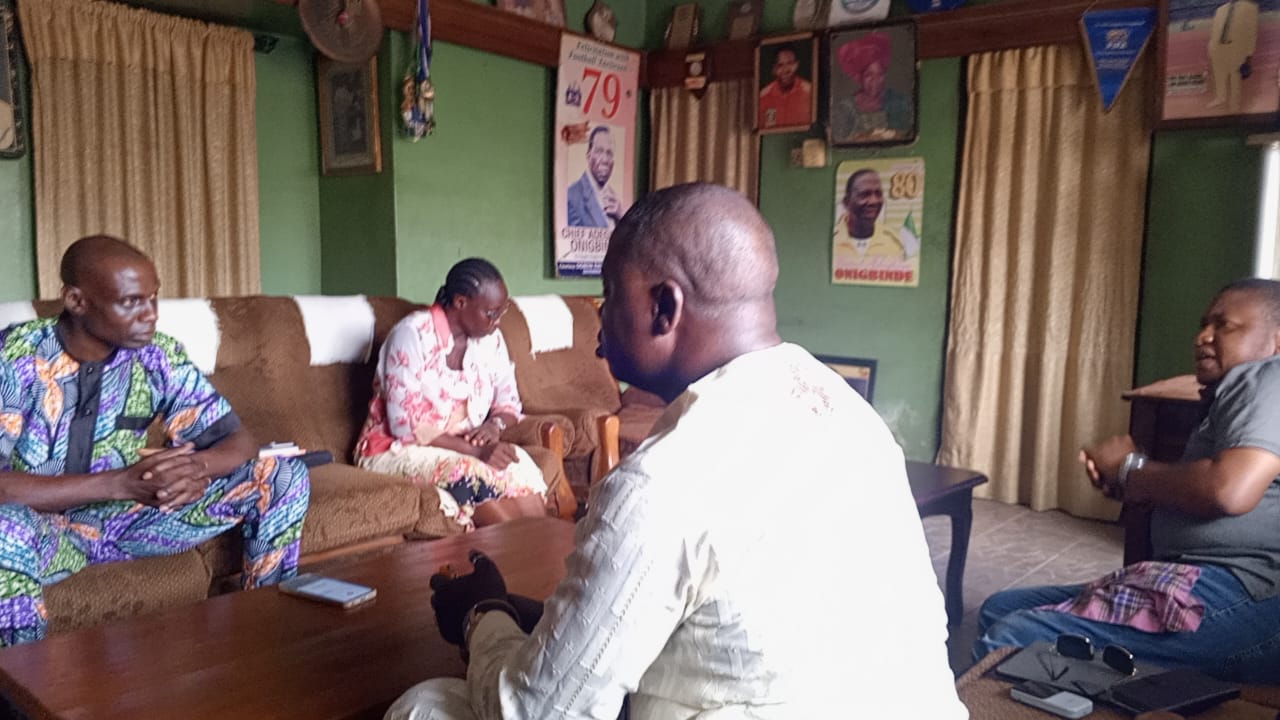
Adegboye Onigbinde’s Legacy: Integrity, Football And A Nation’s Debt Of Gratitude
•written by Kazeem Awojoodu March 14, 2026
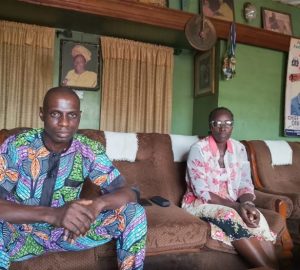
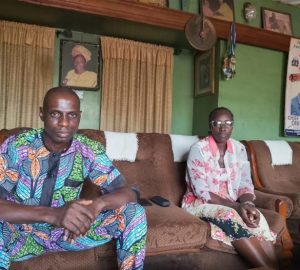
•The last born of the Onigbinde’s Family Mr Oyekunle Onigbinde and Mrs Olushola Abiodun – nee Onigbinde
In the long and complex history of Nigerian football, certain names command reverence. Some are remembered for trophies, others for the brilliance of their teams. But a few stand apart for something deeper, integrity, discipline and a lifelong commitment to developing the game. One of such men was former Nigeria national team coach, Chief Adegboye Onigbinde, a tactician, teacher and reformer whose influence stretched far beyond the touchline. In this write up, KAZEEM AWOJOODU x-rays the life well spent on purpose of the late football icon. Excerpt:
For decades, Onigbinde served Nigerian football in several capacities, as a player, referee, coach, administrator and technical instructor. Yet, even as tributes continue to pour in following his death at the age of 88, many observers believe the country is still grappling with how best to acknowledge the full weight of his contributions.
Through the reflections of two of his children, Kunle Onigbinde and Olusola Abiodun (née Onigbinde), a portrait emerges not only of a football legend but also of a principled father whose life was defined by integrity.
Born on March 5, 1938, in Modakeke, Osun State, Onigbinde rose to become one of the most influential figures in Nigerian football.
Over the years, he built a reputation as a deeply analytical tactician and a strong advocate of technical excellence in coaching.
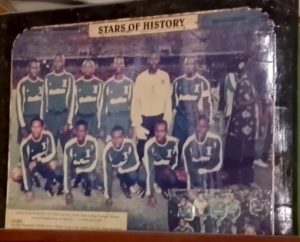
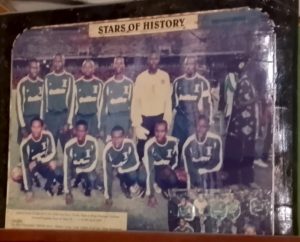
He came into prominence when he took charge of the Nigerian national team, then known as the Green Eagles, in the early 1980s. Under his leadership, Nigeria reached the final of the 1984 African Cup of Nations, eventually losing 3–1 to Cameroon.
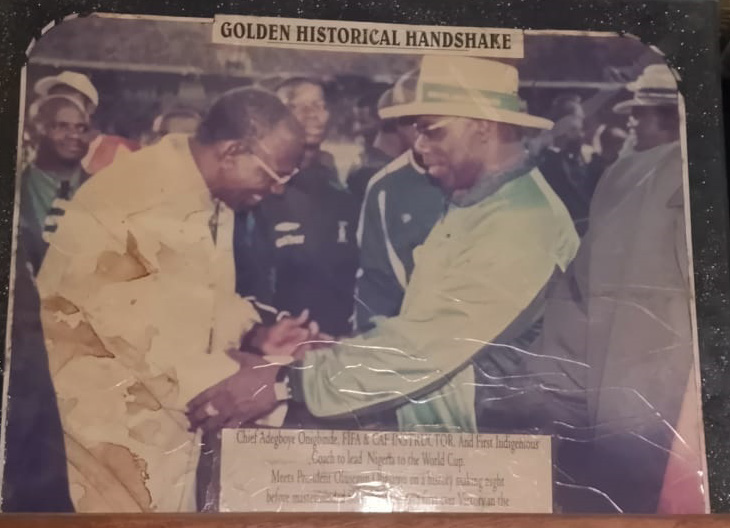
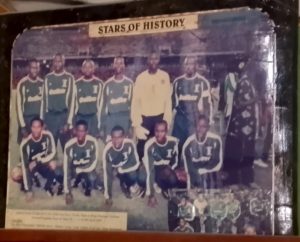
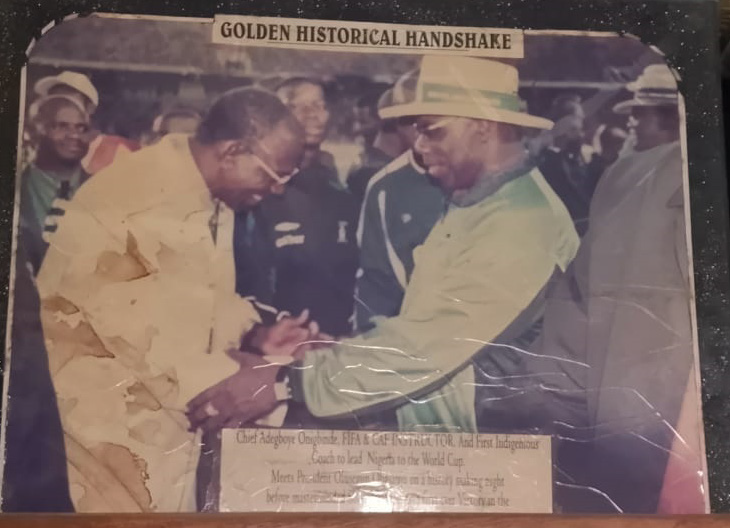
Nearly two decades later, he returned to lead the national team once again. In 2002, Onigbinde guided Nigeria to the 2002 FIFA World Cup in South Korea and Japan, becoming the first indigenous Nigerian coach to lead the national team to the global tournament.
Although, Nigeria did not advance beyond the group stage, his appointment marked a significant milestone in the long struggle for indigenous coaches to command respect in a football system that had often favoured foreign managers.
To his family and those who knew him closely, Onigbinde’s influence extended far beyond match results.
Speaking in an interview, his last son, Kunle Onigbinde, described his father as a man whose personality left a lasting impression on everyone he encountered.
“My father was a great man while he was alive,” Kunle said.
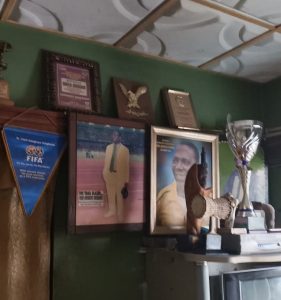
“Everyone who knew him would describe him as a perfect gentleman. Whatever he did, he gave his best.”
That reputation was not confined to Nigeria. Through his work with the Confederation of African Football (CAF) and FIFA, Onigbinde earned international respect as a football educator and technical expert.
He served as a CAF technical instructor and later worked with FIFA’s technical study groups, contributing to coaching education and tournament analysis. These roles placed him among a select group of African football thinkers who helped shape coaching development on the continent.
According to his daughter, Olusola Abiodun, the same principles that earned him respect in football also defined his life at home.
“He was a principled man who believed in doing things the right way,” she said.
“At home, he always reminded us that integrity was more important than popularity.”
•A Father And Mentor
Despite the demands of football, Onigbinde remained deeply devoted to his family.
Kunle recalled that his father’s sense of responsibility extended beyond his immediate household to relatives and young people in the community.
“He took good care of his children and members of the extended family,” he said.
“Even young people on the streets — he would call them, advise them and encourage them.”
One of the traits that defined him, according to his children, was his calm disposition.
“When you went to him with a problem, he would listen patiently,” Kunle explained. “By the time you left his presence, the problem would have been solved.”
Olusola said that calm wisdom shaped their upbringing.
“No matter the situation, he never panicked,” she said. “He would listen first and then guide you with patience.”
•Champion Of Indigenous Talent
A central theme in Onigbinde’s football philosophy was his belief in indigenous talents, both among players and coaches.
At a time when Nigerian football often relied on foreign managers, he consistently advocated the development of local coaching expertise.
That philosophy extended to player discovery as well.
According to Kunle, it was during preparations for the 2002 World Cup that his father discovered future Nigerian goalkeeping legend Vincent Enyeama.
While scouting a domestic league match between Enyimba and Julius Berger in Abeokuta, Onigbinde noticed the young goalkeeper and recognised his potential.
Enyeama would later become one of Nigeria’s most celebrated goalkeepers, serving the national team for nearly a decade.
For Onigbinde, the discovery reinforced a belief he often expressed: that Nigeria possessed abundant local talent capable of competing globally if properly nurtured.
Builder Of Football Institutions
Beyond the pitch, Onigbinde also played a role in shaping the administrative structure of Nigerian football.
According to his son, he contributed to institutional reforms that helped modernise the sport in the country.
“He was involved in the transformation of the Nigeria Football Association into what is now the Nigeria Football Federation,” Kunle said.
He also supported the strengthening of the technical department within the national team structure, an initiative aimed at professionalising coaching, player development and tactical analysis.
For Onigbinde, sustainable football success required strong institutions, technical expertise and long-term planning.
Following his death on March 9, 2026, tributes poured in from across the Nigerian football community.
Former Nigerian international coach, Felix Owolabi described Onigbinde’s life as one defined by service and achievement.
“Chief Onigbinde lived an accomplished life full of legacies and fulfilment,” he said.
“Your death is universal, but your name will remain in the sands of time.”
Another former Super Eagles player, Oladimeji Lawal, said his passing would leave a major void in Nigerian football.
“His demise will leave a very big vacuum,” Lawal said.
“He helped shape many lives and careers.”
President Bola Ahmed Tinubu also paid tribute, praising the veteran coach’s lifelong contributions to grassroots football, national team success and coaching development.
Despite his decades of service, one issue remains sensitive for the Onigbinde family.
The respected coach never received one of Nigeria’s national honours, such as the Member of the Order of the Niger (MON) or Officer of the Order of the Federal Republic (OFR).
His children believe that recognising his legacy would send an important message about the value of integrity and service.
“We would appreciate it if Nigeria could find a way to immortalise him,” Kunle said.
Such recognition, they suggest, could include naming a stadium, training facility or sports institute after the veteran coach.
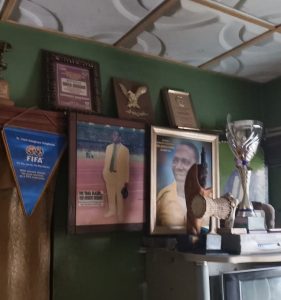
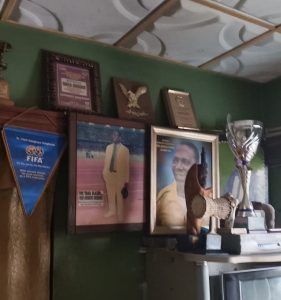
Today, the legacy of Adegboye Onigbinde lives on in the players he mentored, the coaches he trained and the philosophy he championed.
He believed Nigerian football could reach the highest levels in the world through discipline, planning and technical development.
But for his children, the legacy is even simpler. They want their father remembered not only as a football tactician but as a man who dedicated his life to helping others.
“He devoted his life to football and to people,” Kunle said.
As Olusola quietly reflected:
“He lived a life of integrity and that is what we want people to remember most.”
A man who gave everything to the game he loved, yet whose country may still be learning how to say thank you.
•Culled From Daily Independent Newspapers